Physics Configuration System
This section documents the Physics Configuration System (PCS), the configuration layer of epicprod and the principal place where physicists meet the production system: the tag catalog of physics and processing definitions, the datasets and sample variants composed from them, the composed-name identity, and the browse and compose interface from which production tasks are built and submitted.
The Configuration Layer
PCS is the catalog of physics and processing definitions from which production tasks are composed, and the system of record for what those definitions mean. Like all of epicprod it is part of the ePIC PanDA infrastructure at BNL, proxied for open collaboration access, and it serves PanDA use beyond production: the streaming workflow testbed and the AID2E detector-design project compose PanDA work from the same catalog. The working vocabulary — tags, datasets, sample variants, production configs, and the composed name — is defined in Concepts; this section describes the system built on it, with implementation detail in PCS.md.
Tags and the Tag Catalog
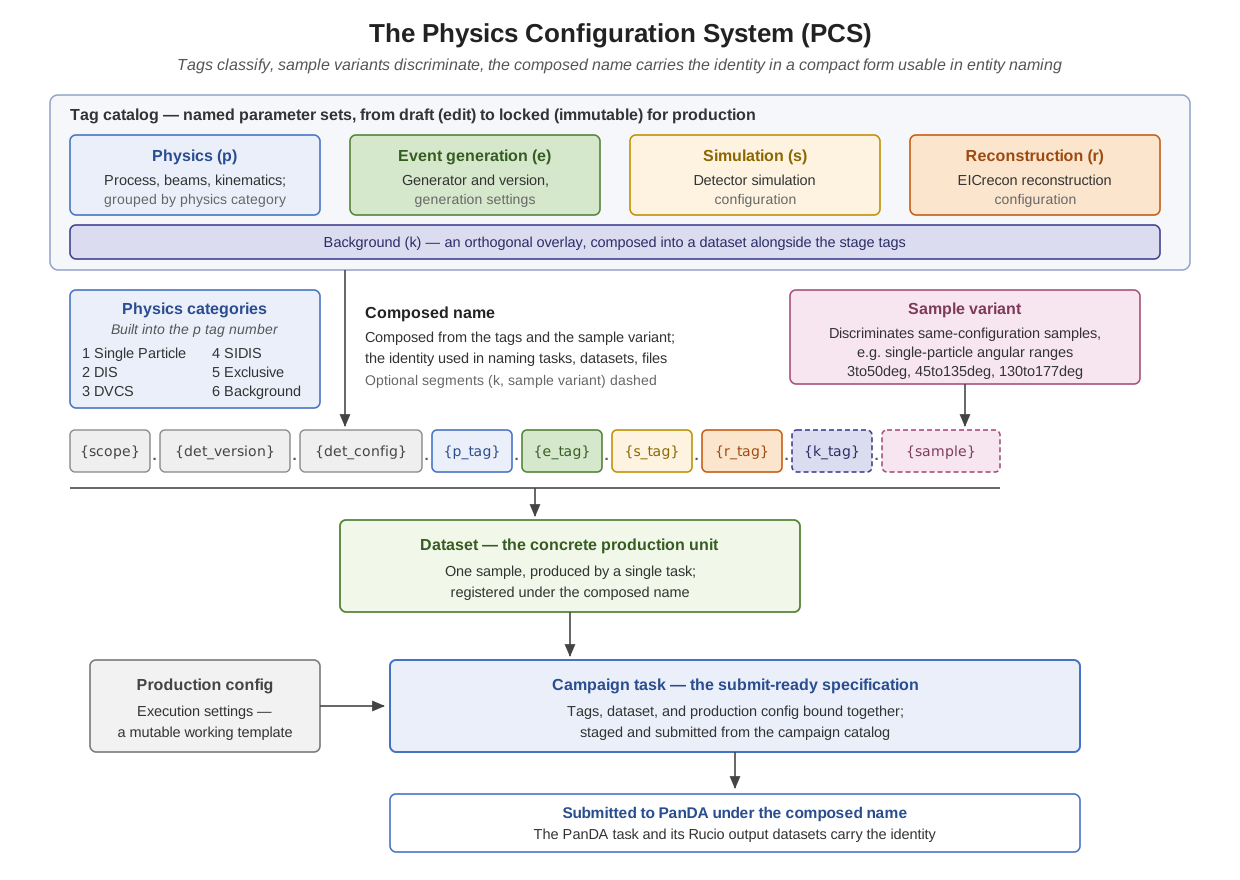
Four tag types classify the stages of production — physics (p), event generation (e), simulation (s), and reconstruction (r) — organized under physics categories, each tag carrying a parameter set appropriate to its type. The fifth type, background (k), is an orthogonal overlay: backgrounds compose into datasets alongside the stage tags, keeping signal and background configurations independent and avoiding the tag explosion of signal-background combinatorics.
Tags follow the draft-refine-lock lifecycle: a draft tag is editable by its owner, and a locked tag is immutable and production-ready — a stable reference whose meaning never changes. The whole ePIC production record, current and past campaigns alike, is expressed on the tag basis, so the catalog is both the configuration source for new production and the classification of everything already produced.
Datasets, Variants, and Identity
Datasets bind tags into a defined data product — one sample, produced by a single task — with sample variants discriminating same-configuration samples produced separately. The composed name built from these entities carries the identity in a compact form usable in entity naming — tasks, datasets, and files: catalog pages, links, the API, the PanDA task name, and the Rucio output namespace all carry it, as diagrammed above and specified in Concepts. Production configs complete the picture on the execution side: reusable, deliberately mutable templates of software stack, resource, and splitting settings.
Browse and Compose
The PCS interface is a two-pane browse and compose view, open read-only to the whole collaboration: a filterable entity browser — search, parameter selectors, tag type selection — beside the detail and edit pane for the selected entity. Ownership sets what a login can do: owners can edit, copy, lock, and delete their draft entities, and anyone can copy anything, including entities they do not own.
Copy and edit is the intended working style. A physicist copies the tag closest to what they need — the copy takes a new auto-incremented label — edits the parameters, choosing from configured values or adding custom ones, and saves. While composing, browsing other tags shows field-by-field which values differ from the entity being edited, and a differing value can be adopted with a click. The same derivation style scales up: a campaign's tasks can be cloned and adjusted for the next campaign rather than rebuilt.
From Tags to Submitted Tasks
Task composition binds tags, dataset, and production config into a campaign task — the submit-ready specification described in Production System. Submission is one click from the compose view: the task specification is generated from the composed entities and submitted through the credentialed production operations agent using the PanDA client API, and the returned PanDA task ID is recorded on the campaign task for tracking and monitoring.
From Request to Configuration
Production requests reach PCS through the triage described in Production System: an operator links the request to the tags and datasets that realize it. The mapping is a human operations process at present; as the request form becomes more structured, the request-to-configuration mapping becomes more programmatic.
The PCS Data Model
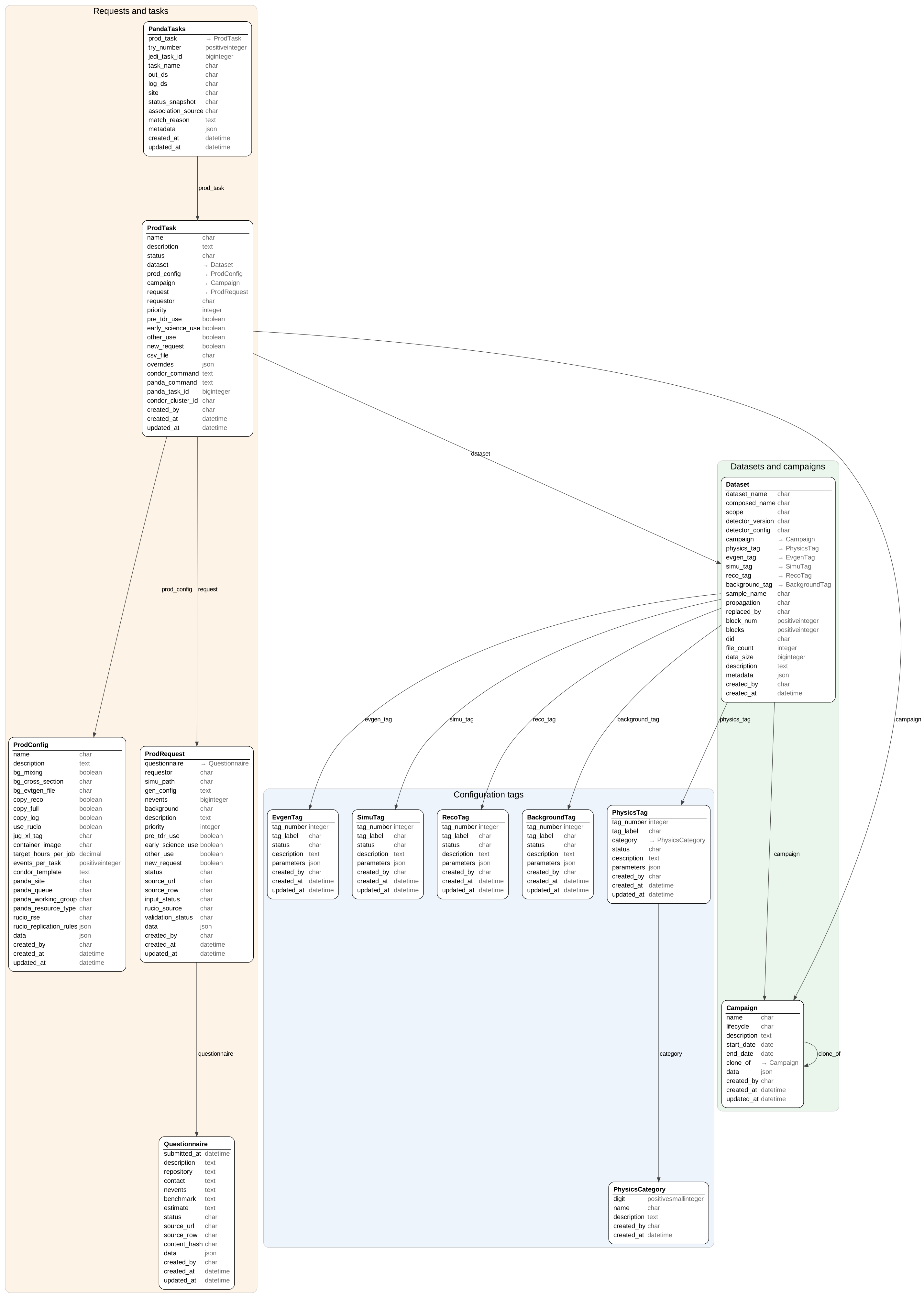
The data model as implemented, generated from the live Django models: every entity with all of its fields and relations. The same schema in database form is the repository's generated testbed-schema.dbml.